


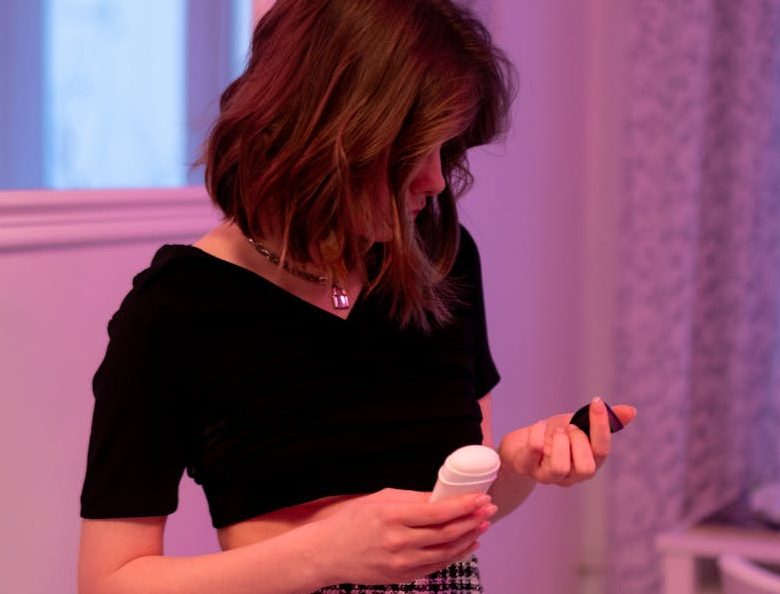
When choosing a roll-on at a cosmetics store, you might consider its scent, price, or packaging. Personally, I always check whether it contains aluminum.
That’s because for years, a serious claim has stayed with me: that using aluminum-containing antiperspirants is directly linked to breast cancer. Some believe these products are responsible for many women developing the disease.
So naturally, I gravitate toward labels that say “aluminum-free.”
But is it really possible that aluminum-containing antiperspirants are the hidden culprit behind breast cancer?
Science has found no proven link between aluminum in roll-ons and breast cancer
Antiperspirants typically rely on aluminum-based compounds to temporarily block sweat ducts and reduce perspiration.
Some animal and laboratory studies suggest that, due to frequent application under the arms, aluminum may be absorbed through the skin and act like estrogen. Estrogen can stimulate the growth of certain types of breast cancer. This has led some researchers to hypothesize a possible link between aluminum and increased breast cancer risk.
However, according to the American Cancer Society, the extent to which aluminum is absorbed through the skin remains unclear. One study showed that only a minuscule amount —approximately 0.012 mg—was absorbed from antiperspirant application, equating to roughly 4 micrograms (µg).
To put that in context, the average American adult ingests about 7–9 mg of aluminum daily through food far more than what is absorbed from a roll-on.
More importantly, there is no conclusive scientific research proving the claim.
In fact, a systematic review conducted in 2014 found no clear evidence that aluminum-containing roll-ons increase breast cancer risk. Similarly, a 2021 study comparing 384 women with breast cancer to 384 without the disease found no significant association between aluminum-based antiperspirant use and cancer risk.
The U.S. National Cancer Institute also reports that no studies to date have demonstrated a significant harmful effect of aluminum that would raise concern over breast cancer.
Finding aluminum in breast tissue doesn’t mean it causes cancer
Some studies have detected traces of aluminum compounds in breast tissue, but this does not prove causation. The human body stores many substances without those being indicators of disease.
For example, a 2023 study that analyzed samples from 176 breast cancer patients found no meaningful difference in aluminum concentrations between tumor tissue, surrounding areas, and healthy breast tissue. In short, the presence of aluminum in tissue does not mean it caused the cancer.
So far, research has not established a cause-and-effect relationship between aluminum exposure and breast cancer.
While experts acknowledge that aluminum may be more readily absorbed through irritated or freshly shaved skin—and that its long-term effects warrant continued study—this still doesn’t support the claim that aluminum in antiperspirants causes breast cancer.
Aluminum is not a recognized risk factor
There is no single cause of breast cancer, but trusted health authorities point to well-established risk factors. According to the World Health Organization, these include advancing age, genetic predisposition, hormonal influences, and lifestyle factors such as excessive alcohol consumption and obesity. Aluminum exposure is not listed among them.
Breast cancer starts in the breast, not in the lymph nodes
From a biological standpoint, this theory also doesn’t hold up. Both the World Health Organization and Cancer Council state that breast cancer originates in the breast and can spread to nearby lymph nodes under the arms—not the other way around. So the notion that cancer starts in the armpit due to roll-on use and spreads to the breast contradicts established medical understanding.
Make health choices based on evidence, not fear
The belief that aluminum-containing roll-ons cause breast cancer is not supported by solid scientific evidence. This misinformation is often presented with misleading certainty and selective data—forms of manipulation that contribute to confusion and undermine scientific literacy.
Meanwhile, some brands that market themselves as “natural,” “clean,” or “non-toxic” exploit this fear for commercial gain—an example of hidden agendas in health marketing. Such narratives can even create feelings of guilt or anxiety among patients.
Choosing an aluminum-free product is a personal preference, and that’s perfectly valid. What matters is that such decisions are made with accurate, reliable information—not panic or misinformation. The best way to protect our health isn’t by chasing rumors, but by leaning on science and transparency.
Sources
- Ghostarchive — “Aluminium, antiperspirants and breast cancer - PubMed | Ghostarchive”. Open source
- Ghostarchive — “Antiperspirants and Breast Cancer Risk | American Cancer Society | Ghostarchive”. Open source
- Ghostarchive — “A preliminary study of the dermal absorption of aluminium from antiperspirants using aluminium-26 - PubMed | Ghostarchive”. Open source
- Cdc — “ingests”. Open source
- Ghostarchive — “Systematic review of potential health risks posed by pharmaceutical, occupational and consumer exposures to metallic and nanoscale aluminum, aluminum oxides, aluminum hydroxide and its soluble salts - PubMed | Ghostarchive”. Open source
- Ghostarchive — “The relationship between use of aluminum-containing anti-perspirant and hair color with breast cancer - PMC | Ghostarchive”. Open source
- Ghostarchive — “Antiperspirants/Deodorants and Breast Cancer - NCI | Ghostarchive”. Open source
- Ghostarchive — “Aluminum concentrations in central and peripheral areas of malignant breast lesions do not differ from those in normal breast tissues - PMC | Ghostarchive”. Open source
- Ghostarchive — “Correlation between daily life aluminium exposure and breast cancer risk: A systematic review - ScienceDirect | Ghostarchive”. Open source
- Ghostarchive — “Breast cancer | Ghostarchive”. Open source
- Ghostarchive — “Can deodorants and antiperspirants with aluminium cause cancer? | Cancer Council | Ghostarchive”. Open source

 Öyküm Hüma Keskin
