


FACT-CHECK CONCLUSION
Claim reviewed
Can the Budwig diet cure cancer?
Conclusion
No. There is no scientific evidence to support using the Budwig diet as a cancer treatment. Oncology organisations also do not recognise Johanna Budwig’s theories as valid scientific knowledge.
Misleading technique(s)
In the 1950s, German biochemist Johanna Budwig developed a diet that she believed could stop malignant cells from growing. Today, the “Budwig diet” remains a familiar name in the world of alternative cancer treatments.
One of the claims surrounding the diet is that it can stop cancer from growing.
Its best-known recipe could hardly be simpler: mix flaxseed oil with cottage cheese. According to the claim, beating cancer can be that easy. In recent years, some influencers have even started swapping the cottage cheese for quark.
Can the Budwig diet really cure cancer?
The Budwig diet is a long way from being backed by science
The Budwig diet has long been promoted as a “cancer cure”. But when we look at the scientific literature, there is little to justify that reputation.
There are no studies published in peer-reviewed medical journals that have tested whether the flaxseed oil and cheese-based diet can treat cancer in humans.
In a 2020 article, oncology professor Ting Bao and microbiologist Jyothirmai Gubili wrote that there is insufficient clinical evidence to support the Budwig diet for either cancer treatment or prevention. They advise patients to avoid the diet during and after cancer treatment.
Flaxseed is not a miracle cure

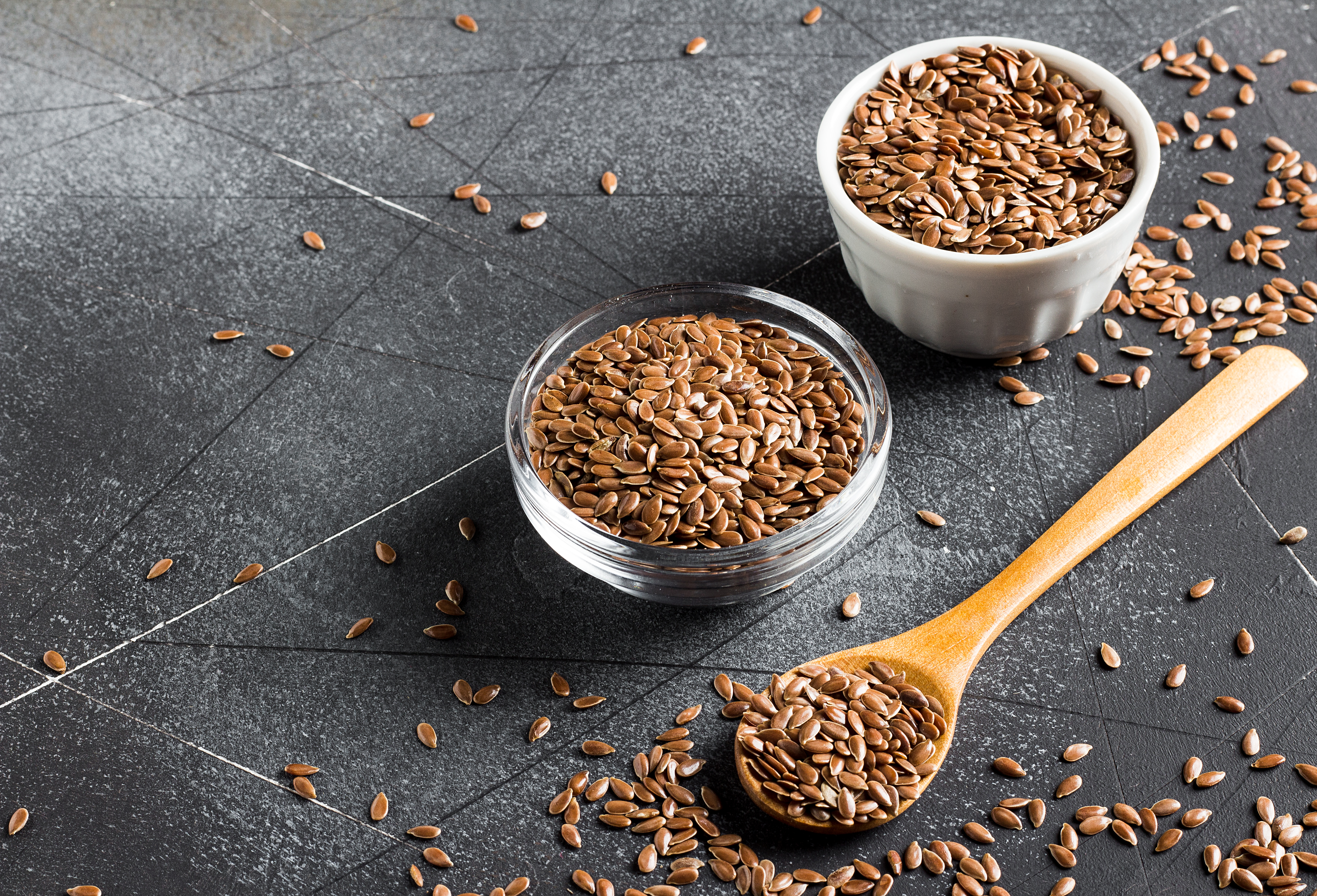
Most of the research in this area has focused on flaxseed itself. Scientists have been studying whether some of the compounds in flaxseed can affect the growth and spread of cancer cells. Laboratory and animal studies have produced some interesting results. But these findings do not yet show that the same effects occur in humans.
Much of this research centres on lignans, compounds found in flaxseed that are often described as plant oestrogens. Researchers are investigating what role they may play in some hormone-related cancers in humans.
There have also been a few small human studies. In one study involving 32 women diagnosed with breast cancer, some markers associated with tumour-cell proliferation fell in the group that consumed flaxseed. But the study was small and short-term. It did not show that flaxseed cures cancer or helps patients live longer.
The American Institute for Cancer Research also notes that human studies on flaxseed have so far been small and short in duration. More research in people is needed.
So where does the evidence leave us? A long way from showing that the Budwig diet works as a cancer treatment. There is also not enough evidence to recommend flaxseed specifically as a way to prevent cancer.
Johanna Budwig had no oncology expertise, and her claims are not considered reliable
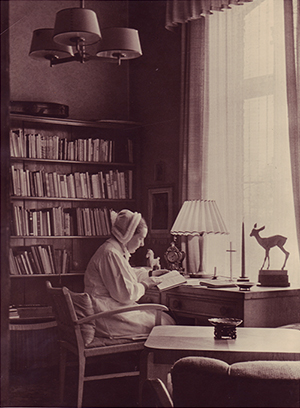
Johanna Budwig, who developed the diet, was a German biochemist and pharmacist. There is no indication in publicly available sources that she received specialist training in oncology.
According to the biography published by the foundation established in her name, she began studying medicine in 1956 but never completed the degree. She later worked as a Heilpraktiker. In Germany, this title is not equivalent to being a qualified medical doctor. The German Federal Ministry of Health states that becoming a Heilpraktiker does not require medical training or a medical examination assessing professional clinical competence.
Supporters often point to another claim to bolster Budwig’s reputation: that she was nominated for the Nobel Prize seven times.
One person said to have nominated her was Werner Ch. Nawrocki, a German doctor who was not an oncologist and worked in naturopathy and homeopathy. In a letter, Nawrocki claimed that Budwig had cured cancer and said he had nominated her for the Nobel Prize based on his own observations. The letter is available online.
But Nobel Prize nominations are kept confidential for 50 years, so this claim about a 1979 nomination cannot currently be verified through official records. More importantly, being nominated does not mean the Nobel Committee endorsed someone’s work. The Nobel organisation itself does not consider the number of nominations a person receives to be a measure of scientific merit.
In other words, invoking “Nobel nominations” tells us very little about whether Budwig’s ideas were scientifically credible.
Today, Johanna Budwig is not regarded as a reliable authority on cancer by mainstream oncology institutions in Germany or elsewhere. She did have an academic background in the chemistry of fats. But German oncology organisations do not recognise her theories as valid scientific knowledge. German oncology guidelines state that these ideas are inconsistent with current research, and cancer organisations do not recommend the Budwig diet for people with cancer.
Unproven treatments can put all of us at risk
Diet advice without a scientific basis will often, at best, do nothing. The more serious risk is that following it can harm our health.
Recipes like these can create false hope and steer people away from treatments that have actually been shown to work.
The Budwig diet is a good example. There may be research into some of its ingredients. You may even know someone who says it helped them. But neither of those things turns a flaxseed-based recipe into a proven cancer treatment.
Sources
- ASCO Post — “Budwig Diet”, 25-04-2020. Open source
- Nutrition and Cancer — “The Effect of Secoisolariciresinol Diglucoside and Flaxseed Oil, Alone and in Combination, on MCF-7 Tumor Growth and Signaling Pathways”, 27-04-2010. Open source
- Nutrition Cancer — “Effects of flaxseed lignan secoisolariciresinol diglucoside on preneoplastic biomarkers of cancer progression in a model of simultaneous breast and ovarian cancer development”, 05-2015. Open source
- Clinical Cancer Research — “Dietary Flaxseed Alters Tumor Biological Markers in Postmenopausal Breast Cancer”, 2005. Open source
- American Institute for Cancer Research — “Flaxseed: Full of Fiber and Phytochemicals”, 08-04-2021. Open source
- Dr. Johanna Budwig Stiftung — “Forschungen von Dr. Johanna Budwig”, 06-11-2022. Open source
- BMG — “Rechtsgutachten zum Heilpraktikerrecht”, 04-2021. Open source
- Emma W. Wiese — “Budwig Doctor Who Found Cure Cancer ByEmma”. Open source
- Nobel Prize — “Nomination and selection of Nobel Prize laureates”. Open source
- Instagram — “Mother Nature Heals on Instagram: "She was nominated for the Nobel Prize 7 times. But somehow… most people have never even heard her name. Dr. Johanna Budwig believed that nutrition and specific natural fats played a major role in health and healing. Her protocol became one of the most talked-about alternative health approaches in the world — yet decades later, people are still searching for the exact recipe, ratios, and preparation method she originally used. The truth is, most versions shared online are incomplete or prepared incorrectly. And according to Budwig’s teachings, the preparation process itself was one of the most important parts. That’s why I put together a full step-by-step guide covering: • The exact ingredients used • The proper ratios • How to prepare it correctly • The full daily protocol explained simply If you want to learn exactly how the Budwig Protocol is traditionally prepared, go check out my profile @naturethecure and download the full guide now. Disclaimer:”. Open source
- Nobel Prize — “Facts on the Nobel Prize in Physiology or Medicine”. Open source
- Onkopedia — “Budwig-Diät (Stand Oktober 2021)”. Open source
- Leitlinienprogramm Onkologie — “Konsultationsfassung S3-Leitlinie Ernährung und Ernährungsmedizin in der Onkologie”, 08-2025. Open source
- Krebsgesellschaft NRW e.V. — “Budwig-Diät » Krebsgesellschaft NRW e.V.”, 2022-09-07. Open source
 Öyküm Hüma Keskin

